

Dihydropyrimidine dehydrogenase (DPD) deficiency is a genetic disorder that affects the metabolism of fluoropyrimidines, such as 5-fluorouracil (5-FU) and capecitabine.
These drugs are widely used in the treatment of several types of cancer, particularly gastrointestinal, colorectal, and breast cancers. However, their administration may cause severe toxicity, affecting approximately 10–40% of patients, and may include adverse events such as myelosuppression, severe diarrhea, vomiting, stomatitis, mucositis, hand-foot syndrome, or neuropathy. In some cases, toxicity may be fatal, highlighting the importance of dose adjustment before treatment initiation. For this reason, analysis of variants in the DPYD gene is recommended before treatment initiation in multiple clinical settings as part of a personalized medicine approach.
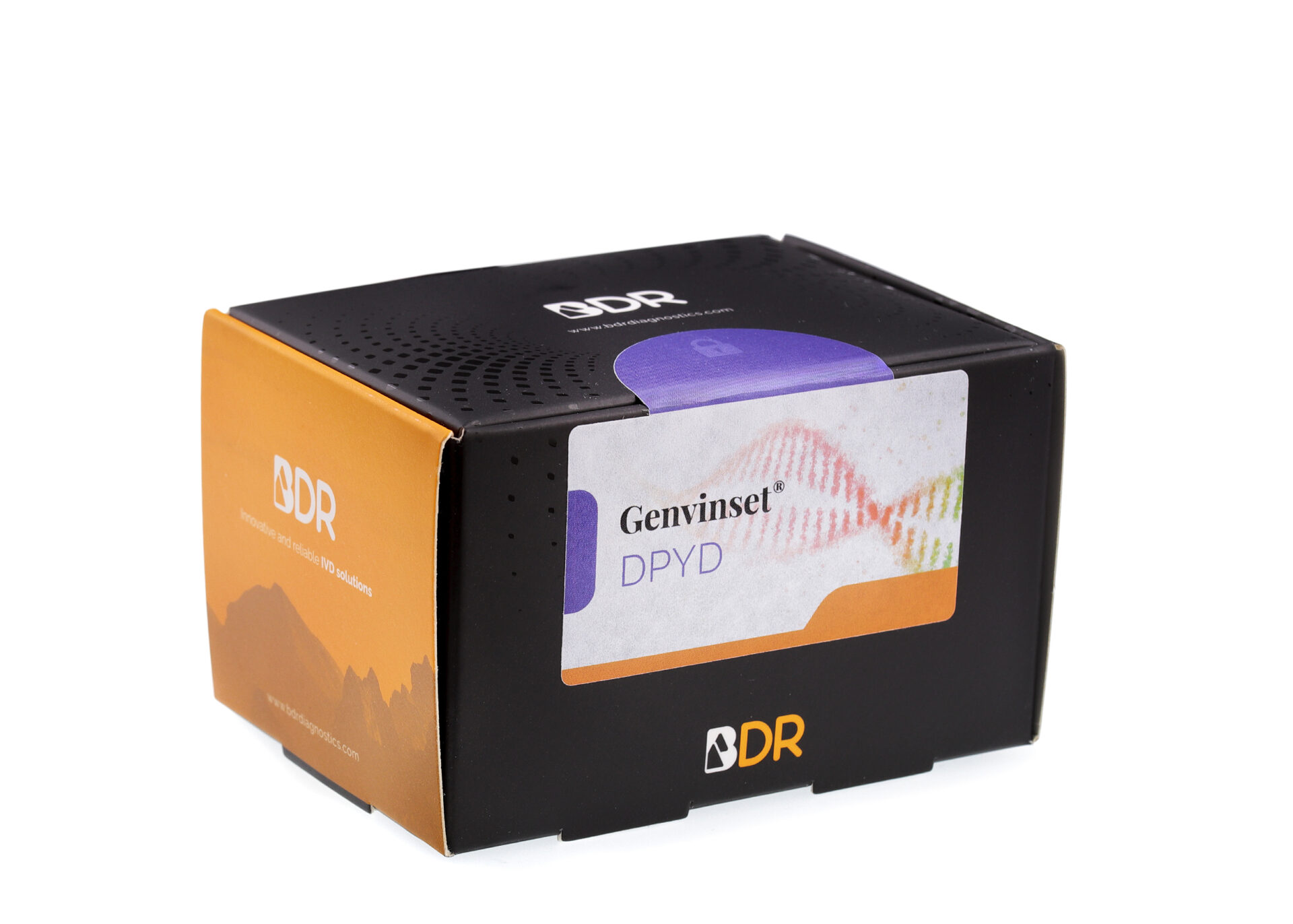
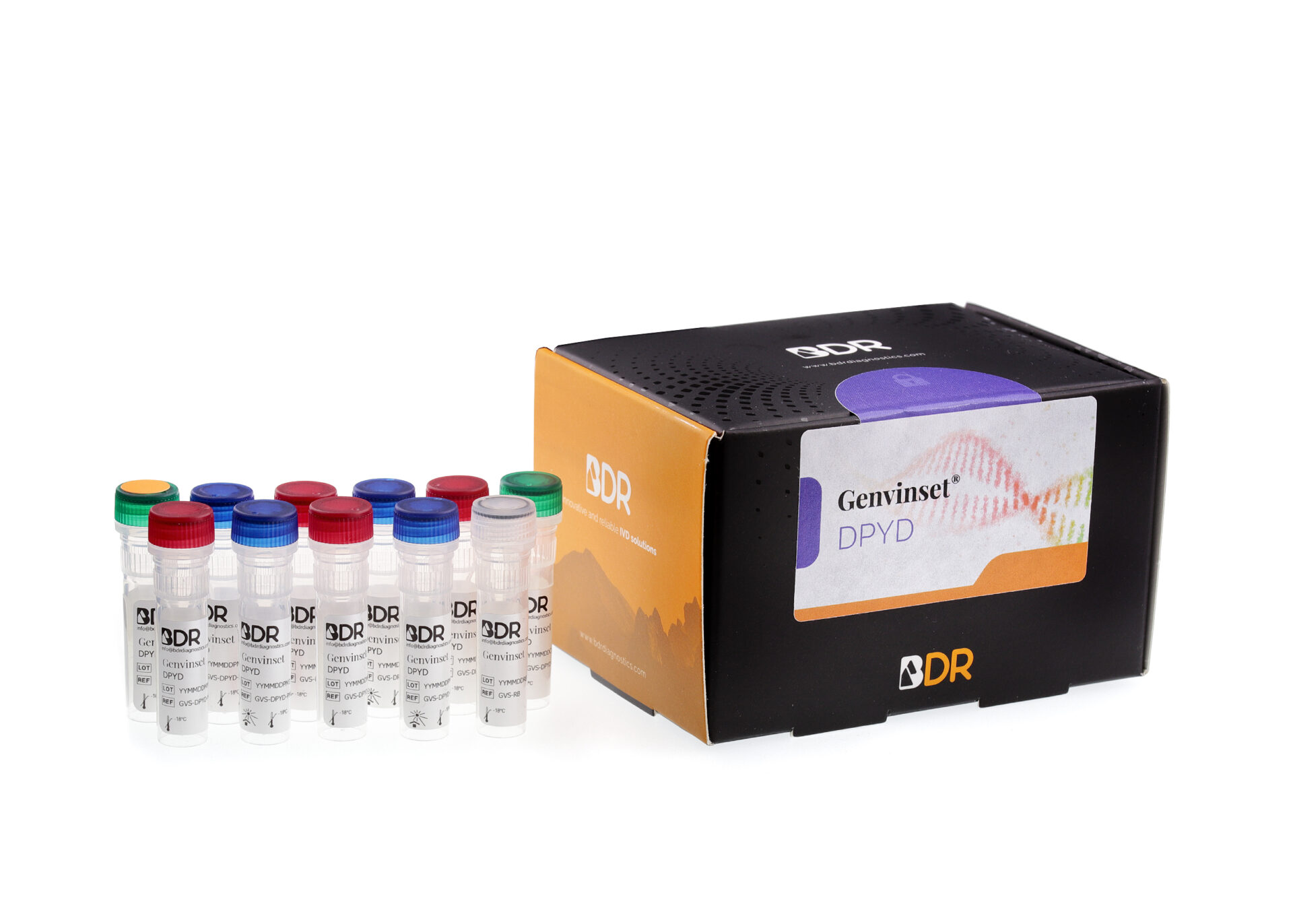
Genvinset® DPYD is a semi-automated kit for the qualitative detection of eight clinically relevant variants in the DPYD gene (OMIM: 612779): c.1905+1G>A (rs3918290; DPYD*2A), c.1679T>G (rs55886062; DPYD*13), c.1129-5923C>G (rs75017182; HapB3), c.2846A>T (rs67376798), c.1236G>A (rs56038477, HapB3), c.557A>G (rs115232898), c.868A>G (rs146356975) and c.2279C>T (rs112766203), associated with increased risk of severe or fatal toxicity linked to DPD genotyping treatment regimes, in genomic DNA extracted from whole blood or buccal swabs, using Real-Time PCR technology with specific TaqMan® probes.
This test is intended to screen patient populations who are candidates for fluoropyrimidinebased therapy and have been referred by the corresponding healthcare professional (e.g., oncologist). The test is not intended to be used in isolation for screening, monitoring, risk assessment or prognosis.
The intended user of the kit is technical personnel trained to carry out the protocol and the interpretation of results described in the instructions for use.

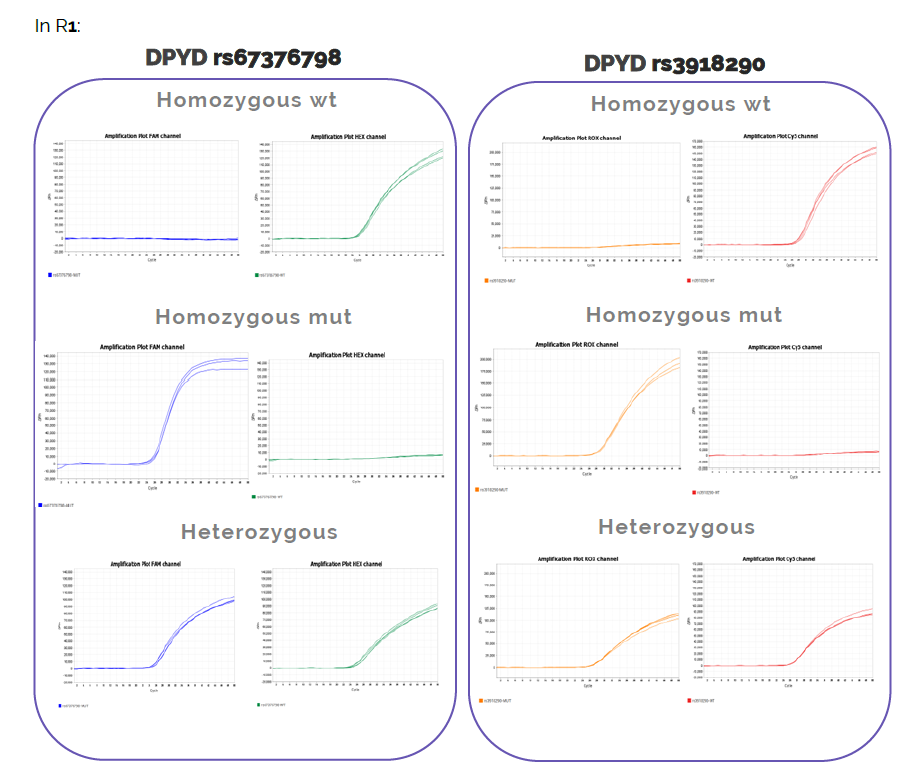
In the rest of the reactions, results are equivalent.