

Hereditary cancer syndromes are genetic conditions caused by germline pathogenic variants in specific genes that confer an increased lifetime risk of developing one or more types of cancer. These syndromes are estimated to account for approximately 5–10% of all cancer cases. The identification of germline pathogenic or likely pathogenic variants is essential for establishing a molecular diagnosis, assessing cancer risk in affected individuals and their relatives, and supporting personalized strategies for cancer prevention, surveillance, and treatment. Major clinical guidelines, including those published by the National Comprehensive Cancer Network (NCCN) and the American Society of Clinical Oncology (ASCO), recommend genetic testing for individuals whose personal and/or family history is suggestive of a hereditary cancer predisposition syndrome.
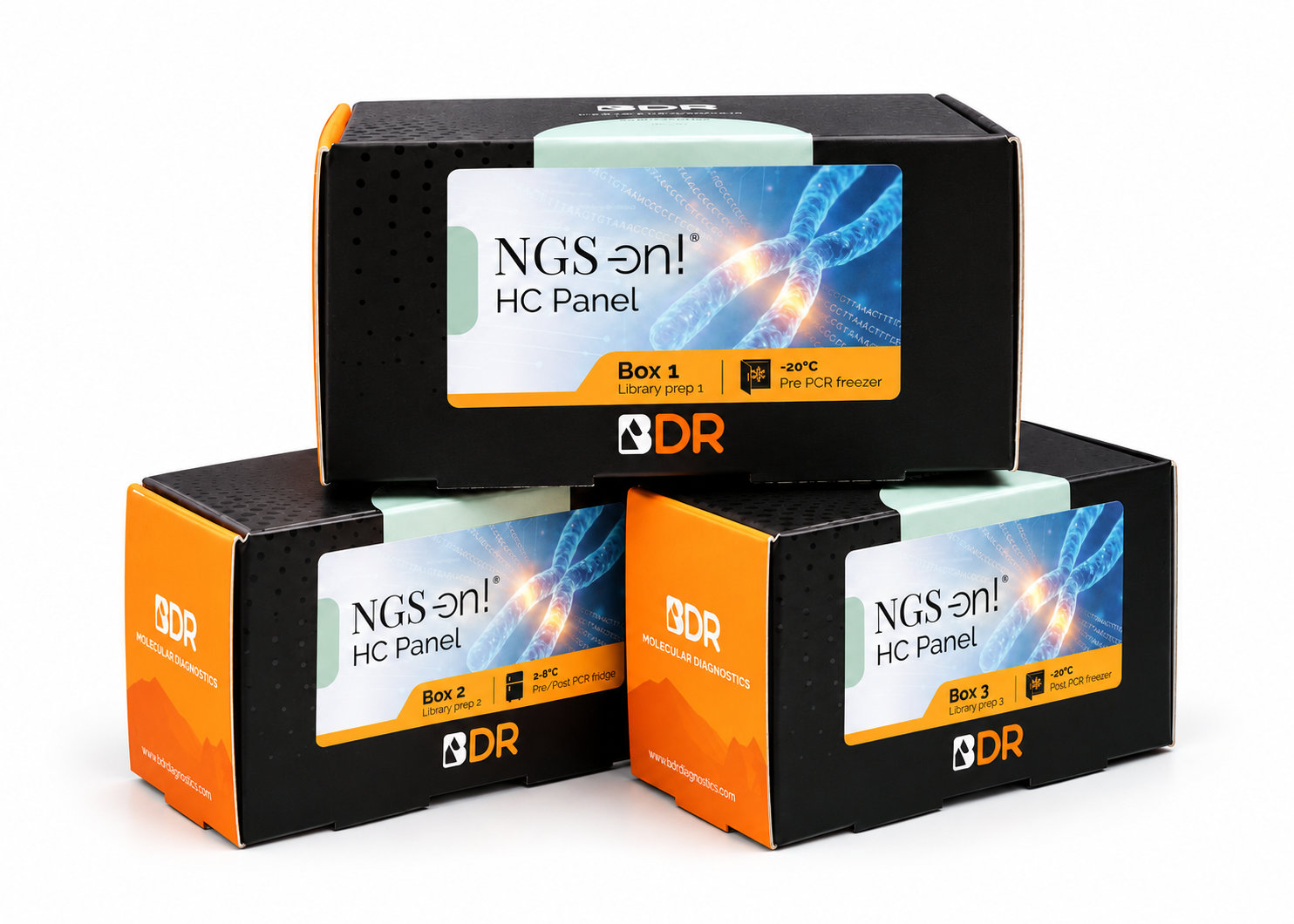
The NGS on!® HC panel is a semi-automated kit for Next-Generation Sequencing (NGS) of relevant regions of genes associated with hereditary cancer syndromes, using genomic DNA extracted from peripheral whole blood. The kit includes reagents for the preparation of DNA libraries enriched for target sequences, intended for use on Illumina NGS sequencing platforms.
The panel enables the analysis of coding regions, exon-intron boundaries, and relevant non-coding regions in 139 clinically relevant genes, 193 SNPs for the calculation of a Polygenic Risk Score (PRS), and 84 SNPs for sample tracking purposes.
The intended purpose of the product is the identification of germline single nucleotide variants (SNVs), small insertions and deletions (Indels), and copy number variations (CNVs). However, variant identification and classification depend on the analytical software employed, which must ensure accurate, robust, and reliable detection and interpretation of genomic variants.
This information is intended to support the assessment of hereditary cancer predisposition in individuals for whom genetic testing is clinically indicated based on their personal and/or family history, or other clinical criteria suggestive of a hereditary cancer predisposition syndrome. Where applicable, the test may also be used in relatives of individuals carrying a clinically relevant germline variant as part of cascade testing.
The assay is not intended to diagnose the presence of cancer. Results must not be used as the sole basis for diagnosis, treatment, surveillance, or other clinical management decisions. Results must be interpreted by qualified healthcare professionals in conjunction with the individual’s personal and family history, other relevant clinical and laboratory findings, and applicable professional guidelines, preferably within the framework of genetic counseling.
The intended user of this kit is technical personnel trained and qualified to perform the protocol described in the instructions for use. Clinical interpretation, variant classification, and reporting must be performed by qualified professionals in accordance with applicable guidelines.