


Behçet’s Disease (BD) is a form of vasculitis that manifests with oral ulcers, urogenital ulcers, uveitis, skin inflammation, enterocolitis, and inflammation of other organs. Despite being a globally distributed disease, BD is more prevalent in the region extending from East Asia to the Mediterranean basin (the Silk Road), with the highest prevalence in Turkey. It is also relatively common in countries such as Japan and Iran.
Although the exact etiology of BD is not yet fully understood, it is considered a complex disease in which genetic and environmental factors play a crucial role. The strongest association described to date is with the HLA-B*51 allele, which forms the HLA-B5 antigen and belongs to the class I Major Histocompatibility Complex (MHC-I). Multiple studies have shown that the presence of HLA-B*51 significantly increases susceptibility to developing the disease, although its exact mechanism in pathogenesis is not yet fully understood.
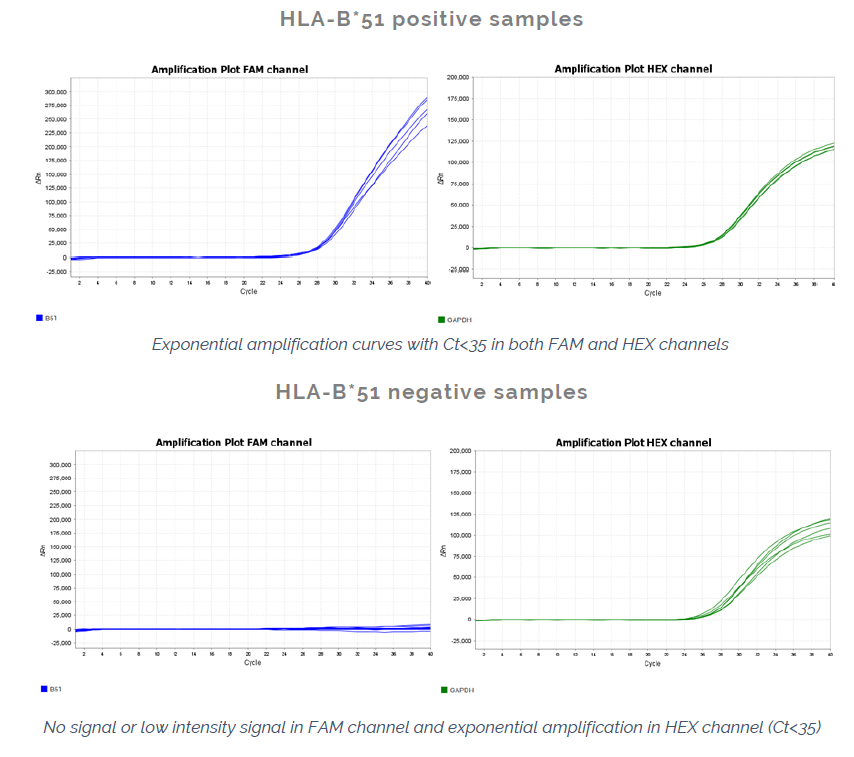
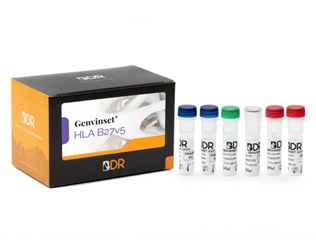
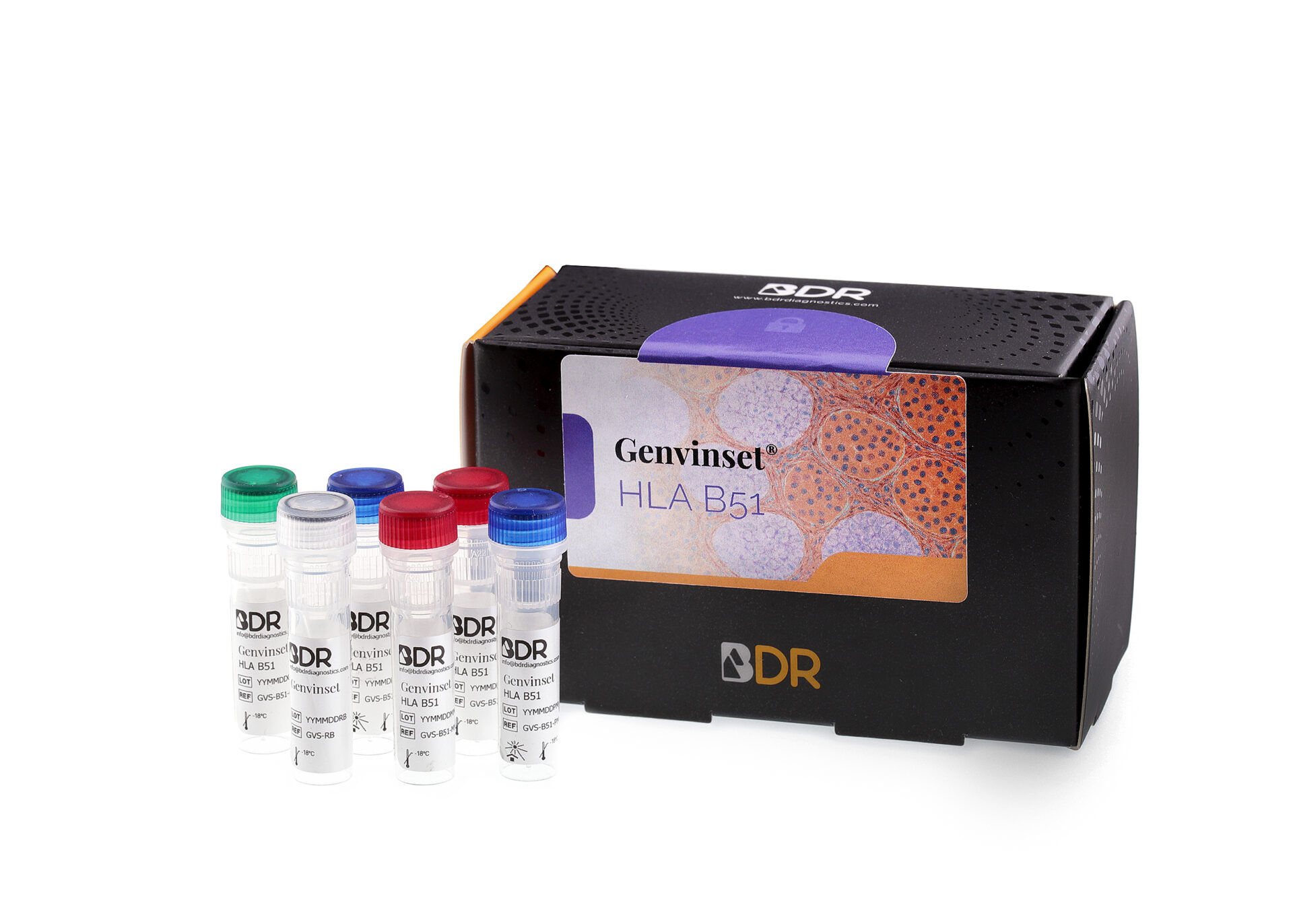
Genvinset® HLA B51 is a semi-automated in vitro diagnostic kit for the qualitative detection of the HLA-B*51 group of alleles in genomic DNA extracted from whole blood, associated with Behçet’s disease predisposition, by Real-Time PCR using TaqMan® probes technology.
The patient referred by the corresponding health specialist (digestive), and taking into account the compatibility of the symptoms presented; several types of skin lesions, inflammation of the joints (arthritis), intestinal inflammation with diarrhoea and inflammation of the nervous system, both central (brain, cerebellum, brainstem, spinal cord, meninges) and peripheral nerves (arms and legs) and/or his family history (for example, a direct ascendant diagnosed with Behçet’s disease) may be subject to the determination of HLA-B*51 alleles group. The results of this test should not be the only ones on which the therapeutic decision is based and should be used as an aid in the diagnosis together with results of other markers of the disease.
The intended user of the kit is technical personnel trained to carry out the protocol and the interpretation of results described in the instructions for use.